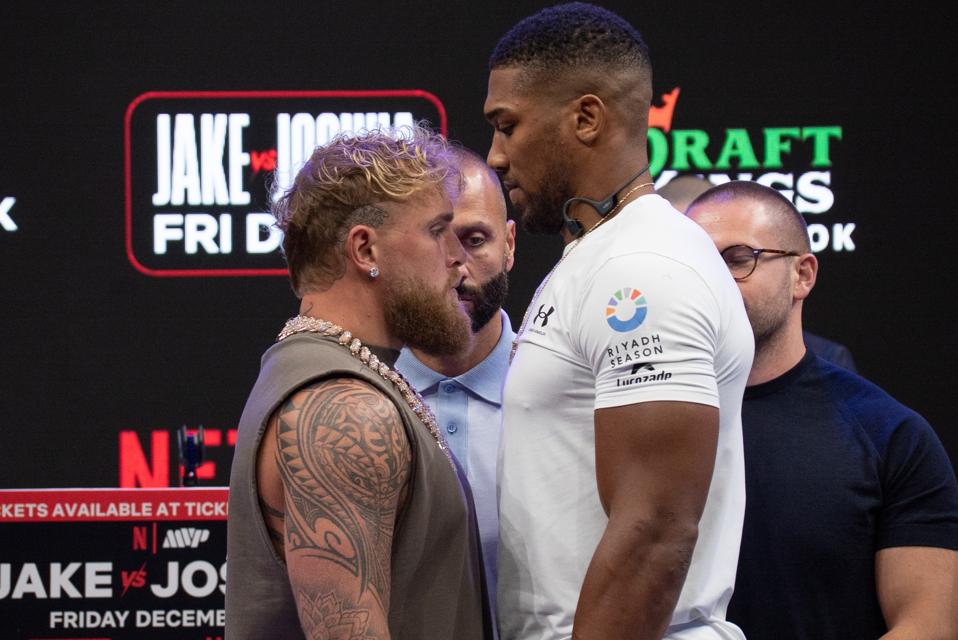
Boxing has always balanced tradition with temptation. On December 19 in Miami, that balance will be tested again, this time with a very clear price tag attached.
Anthony Joshua vs Jake Paul is sanctioned, professional and enormously lucrative.
Billed as Judgment Day and streamed globally on Netflix, the eight-round heavyweight bout brings together a former two-time unified world champion and a modern sporting provocateur who has turned attention into currency. It is a fight boxing did not ask for, but one it has fully monetised.
The money explains much.
Multiple reports indicate the combined purses will exceed $80 million, with Jake Paul expected to earn in the region of $40 million, his biggest payday to date. Anthony Joshua’s guarantee is believed to be even higher, with estimates ranging between $40–50 million, once base purse, promotional revenue and backend agreements are accounted for.
In pure financial terms, this is elite-level boxing business.
Joshua enters the contest with a résumé built on championship rounds and consequence. Olympic gold medallist. Two-time heavyweight champion. Twenty-eight wins, twenty-five by knockout. He has lived at the top end of the sport, where mistakes are punished and narratives are unforgiving.
Paul arrives with a different kind of record. Twelve wins, one defeat, seven knockouts and an unmatched ability to turn curiosity into commercial gravity. His path has been unconventional, but his commitment has been consistent, and his drawing power undeniable. The purse reflects that reality as much as his boxing progress.
The bout will be contested under full professional rules. Eight three-minute rounds. Ten-ounce gloves. No exhibition clauses. No ambiguity. Joshua weighed in around 243 pounds, Paul at approximately 216, underlining the physical and experiential gap that defines the matchup.
Joshua has made it clear he will not dilute the contest for entertainment value. For him, this is about control, authority and reaffirming standards. A clean, decisive victory reinforces his position in the heavyweight landscape and quiets any suggestion that legacy can be rented.
For Paul, the risk is obvious, but so is the reward. Survival alone would shift perceptions. Competitiveness would buy credibility. An upset would detonate boxing’s current order and justify every dollar invested.
Netflix’s involvement adds further significance. This is not just a fight, but a global content moment, designed to reach audiences beyond boxing’s traditional base. Millions will tune in, some for the spectacle, others for the sport, all drawn by the collision of worlds.
This fight will not redefine boxing’s history. But it may reshape its economy.
On December 19, under the Miami lights, Joshua and Paul will not just be fighting each other. They will be fighting for control of the narrative, and for a purse that reflects how valuable that narrative has become.































Comments
Sign in with Google to comment, reply, and like comments.
Continue with Google